
The Asset Management (AM) Sector issues useful guidelines and exchange of best practice on behalf of infrastructure managers (IMs).
Asset management comprises all systems, methods, procedures and tools to optimise costs, performance and risks for the complete rail infrastructure life cycle. The aim is to realize the best ‘value for money’. These optimisations shall address all infrastructure activities (building, maintenance and renewal, including machines and materials) over the whole life cycle as well as the consequences of these activities for the government as owner and for the train operators and passengers as users.


The AMWG is undertaking a review of its purposes and strategic objectives to take account of the major changes and opportunities facing the rail sector, including climate change, digitalization and the change in the type and volume of demand as the sector recovers from Covid-19. The added value that can be provided by the AMWG is based on the experience of its members in taking whole-life, whole-system decisions that link stakeholder objectives to the delivery of work on the ground. Whole system thinking is not yet a mature discipline in railways but all infrastructure managers are starting to adopt asset management approaches to connect the business silos that have existed in railways since the origins of the industry.
Ongoing projects:
For further information, please visit:
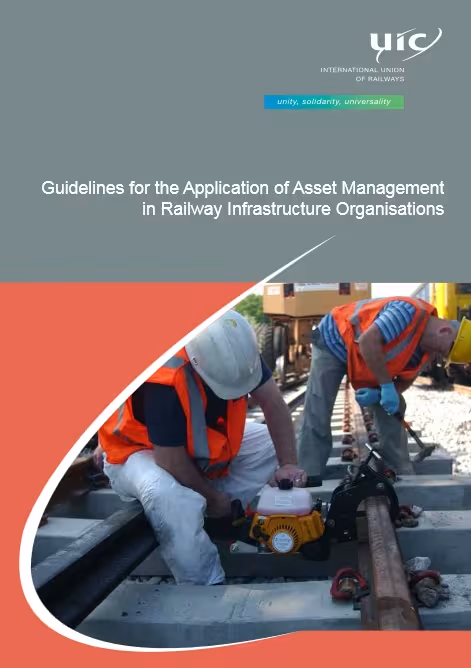
PDF · 784 KB
View Guidelines for the Application of Asset Management in Railway Infrastructure Organisations (2010)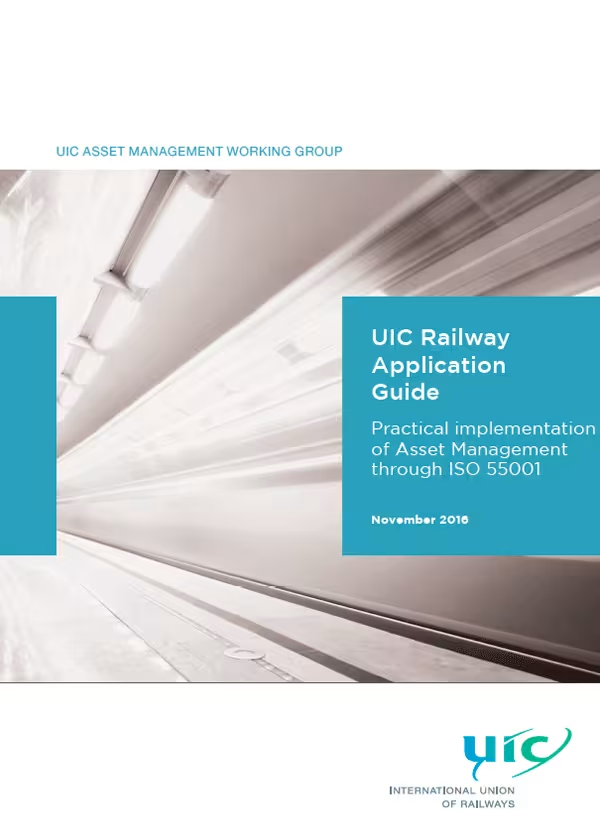
PDF · 2.3 MB
View UIC Railway Application Guide - Practical Implementation of Asset Management through ISO 55001 (November 2016)