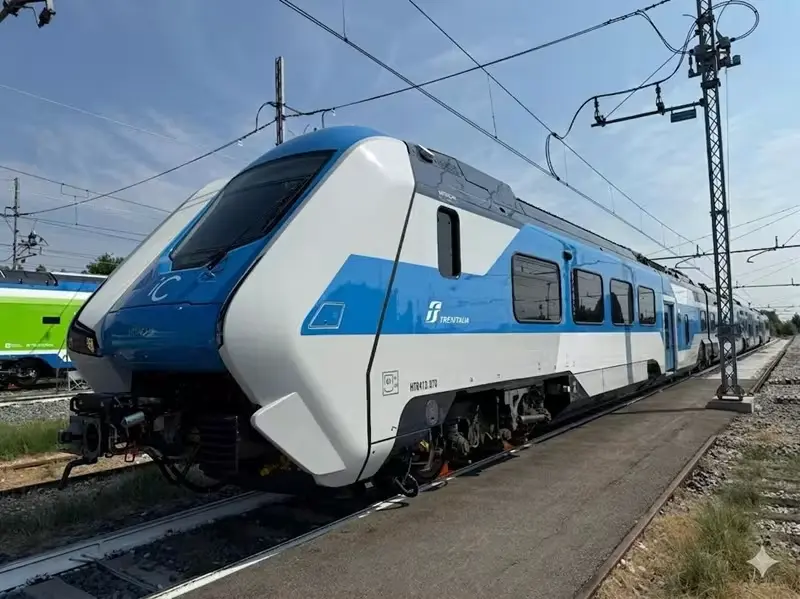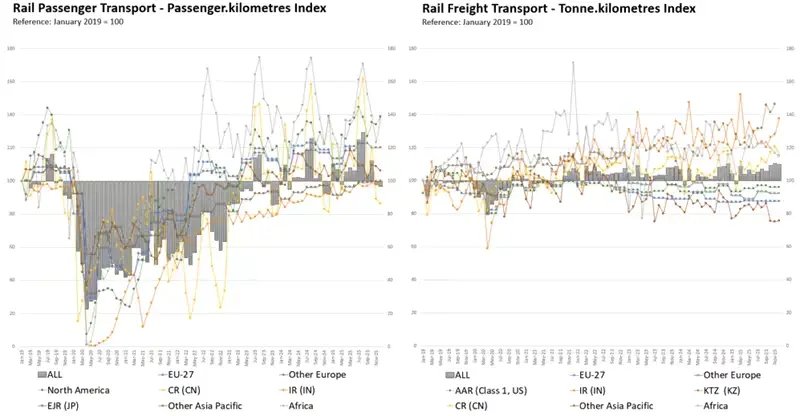

Comprising more than 80% of total railway passengers, commuter and regional rail serves as a backbone for local public transport in many countries around the world. It plays an important role in transport and mobility policies, serving a large proportion of the urban and regional population while presenting an eco-friendly alternative to the use of private vehicles and reducing both pollution and congestion, combining the flexibility of urban transport and the resilience, capacity and efficiency of conventional rail. Nevertheless, there is much room for improvement in the areas of financing, implementation and operation of CRT. Mostly operated under public service obligations and often sharing the infrastructure of conventional rail, this transport segment requires better coordination between the various stakeholders to achieve its true potential.
CRTS may be seen as a worldwide project that can help operators and infrastructure managers to provide a better service and offers a response to multiple urban and regional mobility challenges:
The training programme aims to examine all constituent elements and various types of Commuter and Regional Train Services (CRTS) around the world and to measure their impact impartially and objectively from political, social, and economic standpoints.
This year, we’ve expanded our training across two continents: Join us for the 9th Training in Barcelona, Spain, this October, or attend our inaugural session in Johannesburg, South Africa, in May.

Learn more about the UIC Rail Academy catalogue here.
For further information on our upcoming workshop, and to register, see below:

It plays an important role in transport and mobility policies, serving a large proportion of the urban and regional population while presenting an eco-friendly alternative to the use of private vehicles and reducing both pollution and congestion, combining the flexibility of urban transport and the resilience, capacity and efficiency of conventional rail.
Nevertheless, there is much room for improvement in the areas of financing, implementation and operation of CRT (Commuter and Regional Tran Services). Mostly operated under public service obligations and often sharing the infrastructure of conventional rail, this transport segment requires better coordination between the various stakeholders to achieve its true potential.

PDF · 1.4 MB
View How to improve the attractiveness_ Summary
PDF · 1.3 MB
View Recommendations for Crisis ManagementThis document was prepared by the UIC security division with the support of the members of the security platform in 2...
Leaflet 920-14 The 2 digit country code is based on the old 2 digit railway code. The code is defined in the UIC/OSJD Leaflet 920-14 – Version 2 (March 2005). T
ExploreHigh-speed Data UIC generate databases unique in the world that provides an overview of the high-speed reality regarding: lines, rolling stock, traffic and maps
ExploreTimeline of High-Speed Rail - text 19th – 20th century: From the birth of the railways to HSR Because the rail mode is a guided and low grip transportation syst
ExploreMERITS [fn]MERITS (Multiple East-West Railways Integrated Timetable data Storage) is a UIC activity using a system (tool, database) designed to exchange timetab
ExploreDRTF (Database for Rail Tarif and Fairs) In 2020, UIC completed the procurement process for the implementation of the PRIFIS replacement tool and the design of
Explore8-12 April 2019 18-22 November 2019
ExploreVisit UIC nextstation website: https://nextstation.org General context Railway stations are usually considered from three perspectives: customer access to trai
Explore